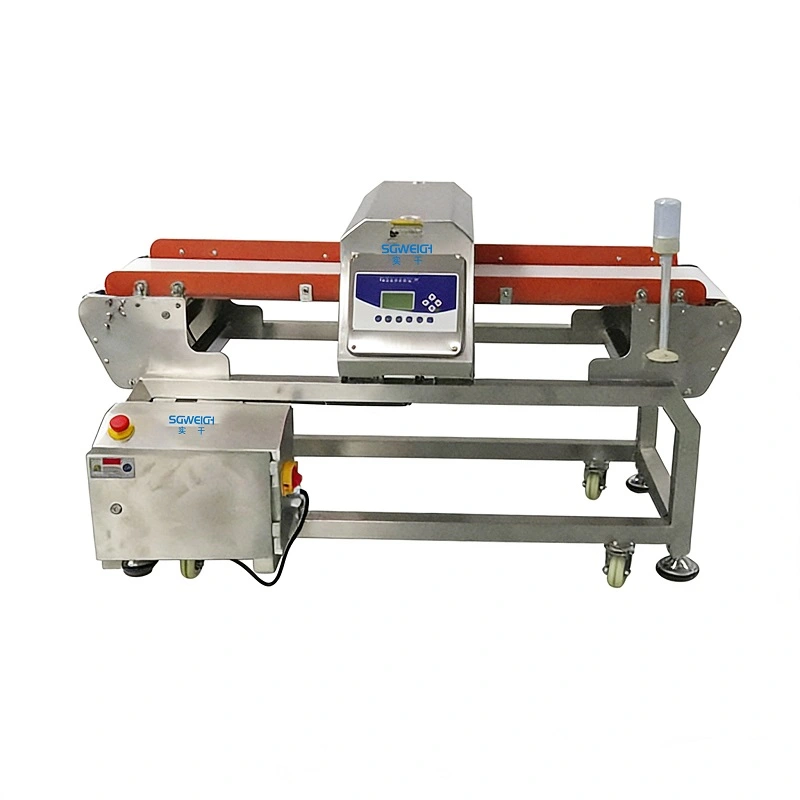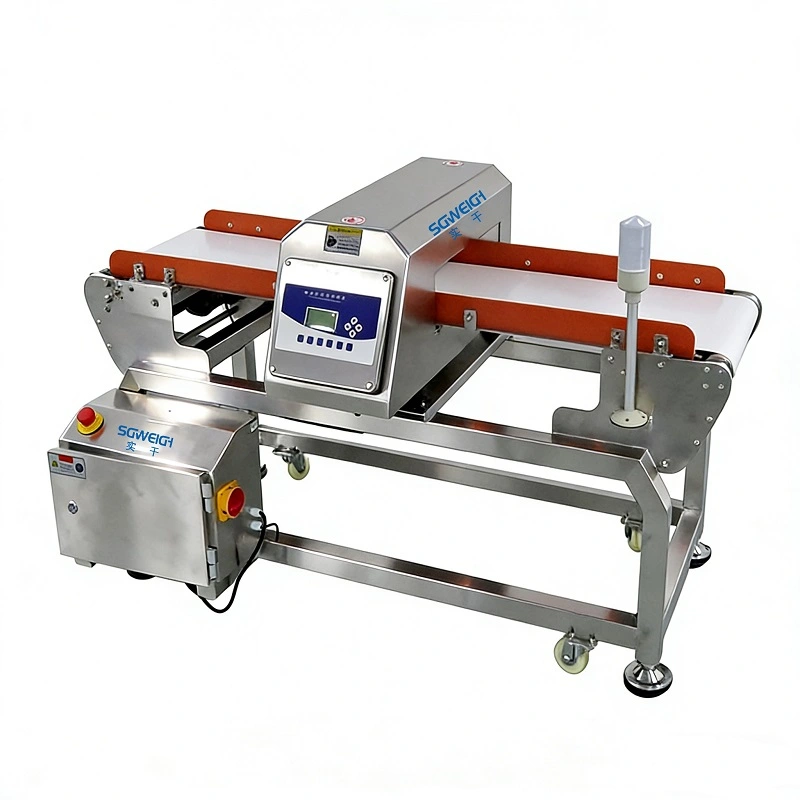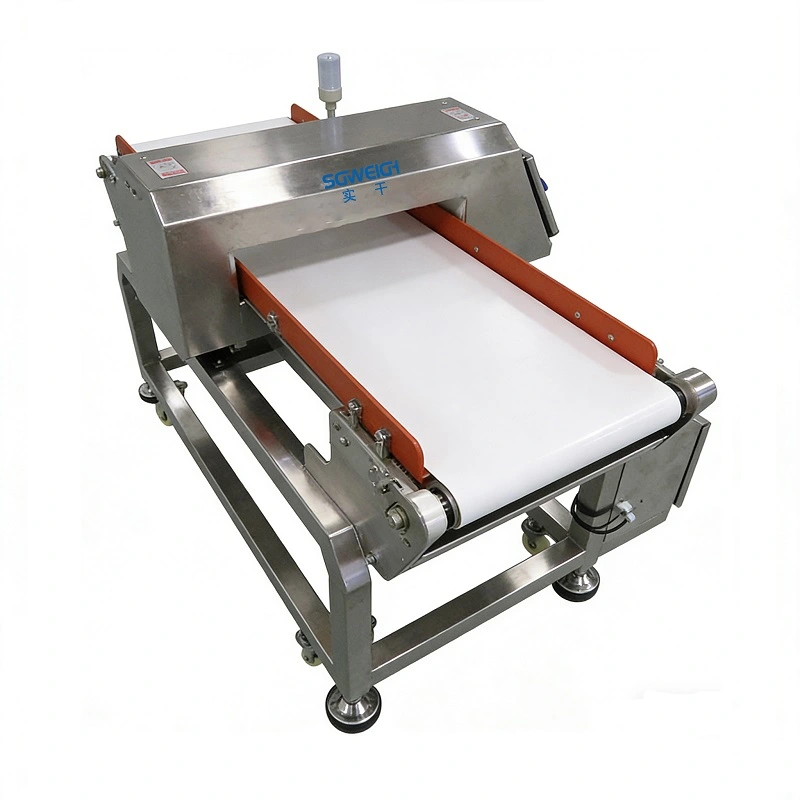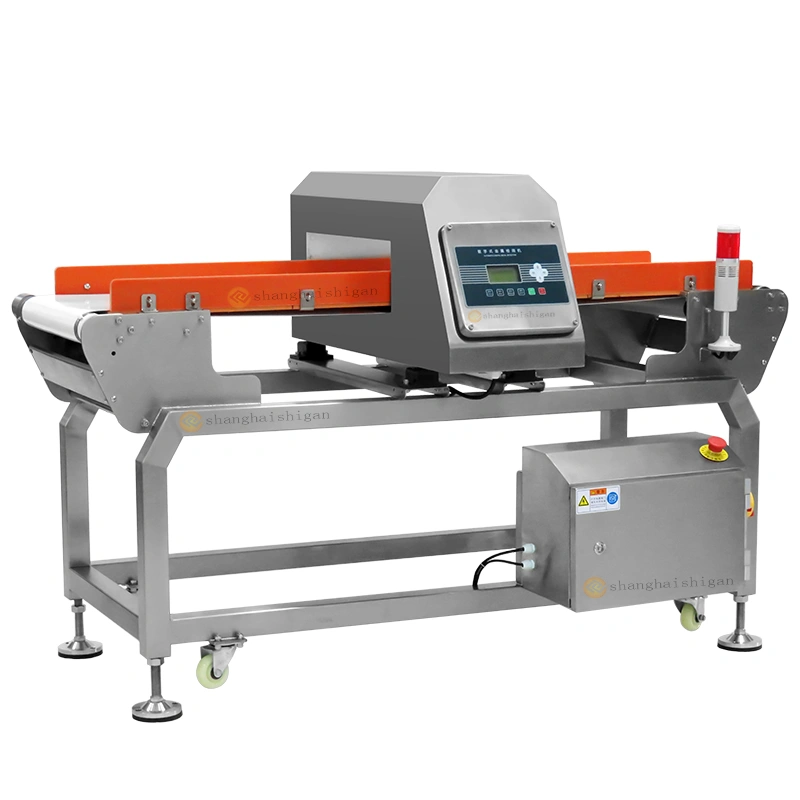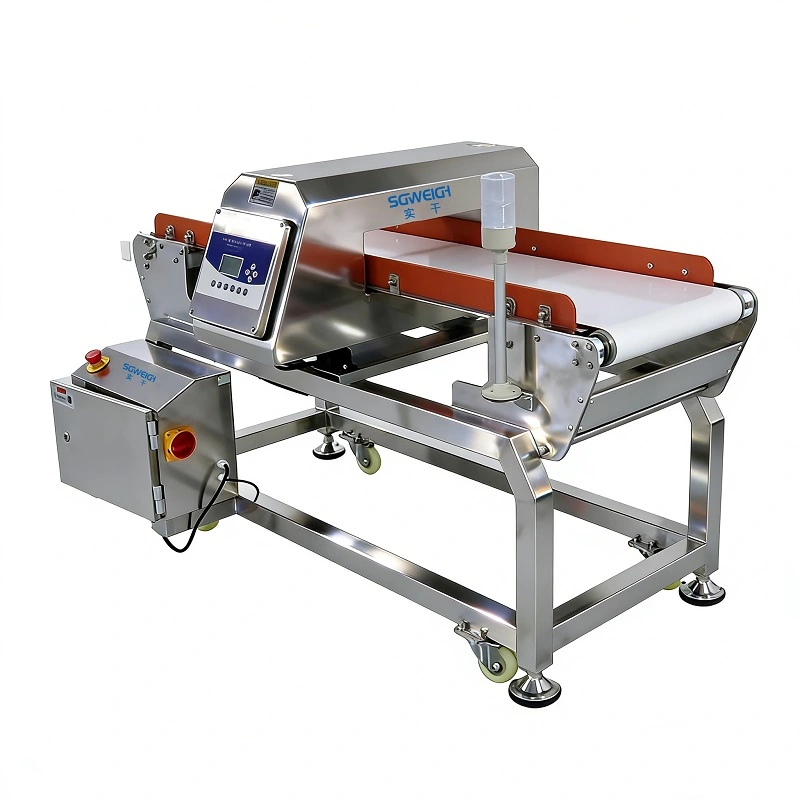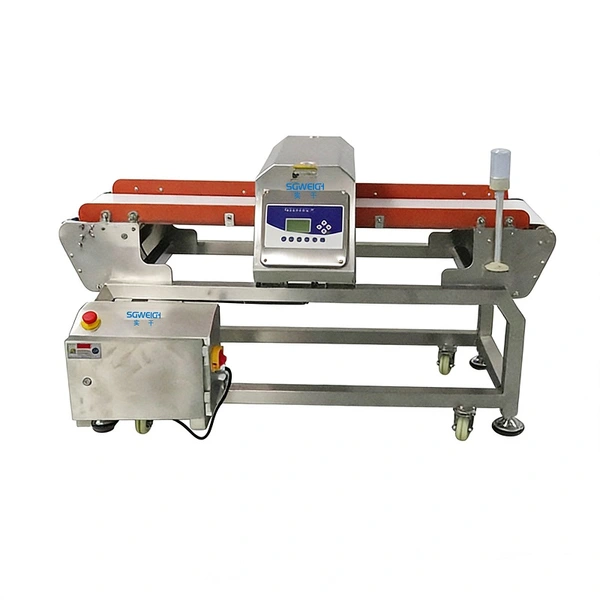
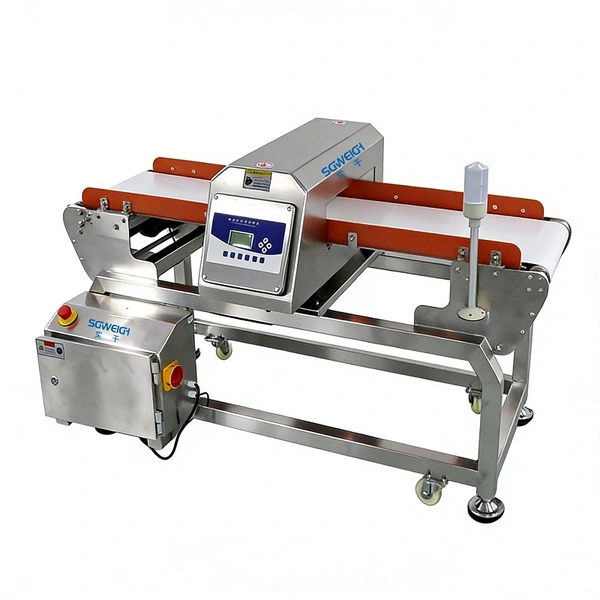
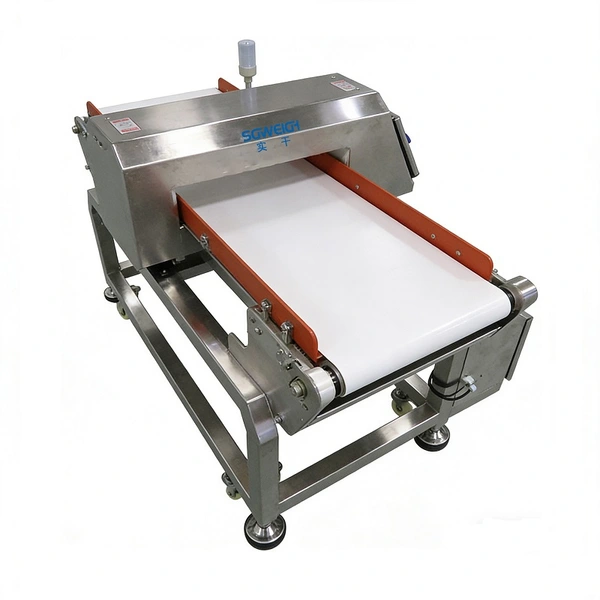
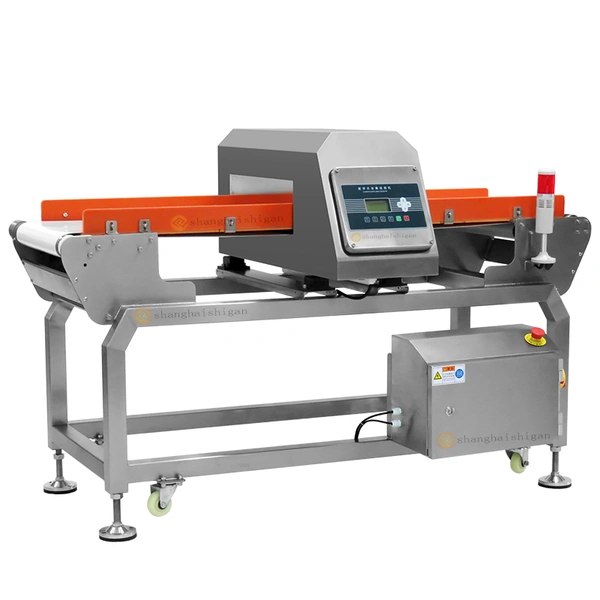
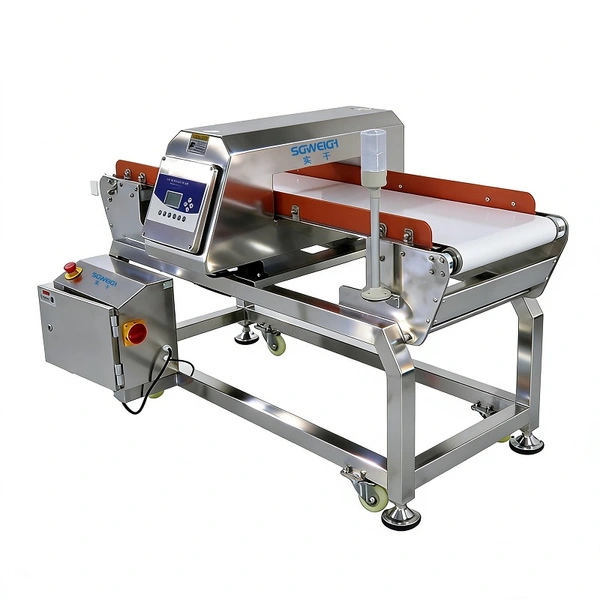


Food Grade Metal Detector is an advanced inspection system designed to detect and remove metal contaminants from food products during processing and packaging. It ensures compliance with international food safety standards such as HACCP and GMP, helping manufacturers prevent contamination risks and protect brand reputation.
Widely used in industries such as snacks, meat, seafood, dairy, and pharmaceuticals, Conveyor All-Metal Detection Machine can be seamlessly integrated into production lines to provide real-time detection with high sensitivity and stability.


| Detection sensitivity: in empty state | H-100mm: Fe≥Φ0.8mm, Non-Fe≥Φ1.5mm, SUS≥Φ1.5mm H-120mm: Fe≥Φ0.8mm, Non-Fe≥Φ1.5mm, SUS≥Φ2.0mm H-150mm: Fe≥Φ1.0mm, Non-Fe≥Φ1.5mm, SUS≥Φ2.0mm H-200mm: Fe≥Φ1.2mm, Non-Fe≥Φ2.0mm, SUS≥Φ2.5mm |
| Effective detection hole width | 150-1000mm customized according to requirements |
| Effective detection hole height | 80-500mm customized according to requirements |
| Maximum speed of conveyor belt | 25m/min |
| Conveyor belt material | food grade PU belt |
| Protection class | IP65 |
| Display and operation mode | LED fast key input/Touchscreen |
| Power requirements | AC220V 50HZ |
| Power | 200W |
| Alarm mode | metal detection, alarm belt stop or automatic removal |


1. High Sensitivity Detection
Detects ferrous, non-ferrous, and stainless steel contaminants with high accuracy
2. Automatic Reject System
Instantly removes contaminated products without interrupting production
3. Intelligent Control System
Digital or multi-frequency technology reduces product effect and improves stability
4. Food-Grade & Hygienic Design
Stainless steel construction, suitable for washdown environments.
5. Easy Integration
Compatible with conveyors, packaging machines, and checkweighers
6. Data Recording & Traceability
Supports production data storage for quality control and audits
7. User-Friendly Operation
Touchscreen interface with multi-language support


Shanghai Shigan Industrial Co., Ltd.

National High-tech Enterprise

Member Unit of China Pharmaceutical Equipment Industry Association


Inner use the plastic wrapping ,out package will use stronger wooden cases.
Our standard package process:
1) Dust & Cleaning
2) Lubricate Drive Parts
3) Divide Machine Into Modules
4) Wrap Modules With Plastic Film
5) Packing Modules into Plywood Cases
6) Mark Shipping Mark In The Cases
If any special requirements, we will pack it as requested.



Q1. Why is metal detection important in the food industry?
A: Metal detection is critical to prevent contaminated products from reaching consumers. It protects brand reputation, ensures regulatory
compliance, and reduces the risk of costly product recalls.
Q2. What types of metals can be detected?
A: Most food metal detectors can detect:
Ferrous metals (iron, steel)
Non-ferrous metals (copper, aluminum)
Stainless steel (harder to detect but possible with high sensitivity systems)
Q3. How does a food metal detector work?
A: Food metal detectors use electromagnetic fields to identify metal contaminants. When metal passes through the detection zone, the
signal is disrupted, triggering an alarm or automatic reject system.
Q4. What is the difference between single-frequency and multi-frequency metal detectors?
A: Single-frequency detectors operate at one frequency and are suitable for basic applications.
Multi-frequency detectors can scan at multiple frequencies, improving detection accuracy—especially for challenging products like
high-moisture foods or aluminum packaging.
Q5. Can food metal detectors work with aluminum foil packaging?
A: Yes, but standard systems struggle with foil packaging. Specialized solutions such as:
Ferrous-in-foil detectors
X-ray inspection systems
are typically used for these applications.
Q6. How do you choose the right food metal detector?
A: Key factors include:
Product characteristics (size, moisture, packaging)
Required sensitivity level
Production speed
Integration with conveyors or packaging machines
Choosing the right system ensures optimal detection performance and efficiency.